High-dust work can expose employees to fine airborne particles that are easy to inhale and difficult to see. Cutting timber, grinding concrete, handling grain and disturbing old building materials can all create conditions in which ordinary face coverings are inadequate. The right respiratory protection must be chosen according to the contaminant, exposure level, task duration and individual wearer.
A full-face respirator and a P3-filtered mask can both have a role, but they are not interchangeable. The decision should follow a workplace risk assessment and sit alongside controls such as extraction, ventilation, water suppression and enclosure.
Begin With the Hazard, Not the Product
Before choosing equipment, identify what is present in the air. Some tasks generate particulate dust, while others may also release gases, vapours or fumes. A particulate filter cannot automatically protect against every airborne hazard.
The expected concentration matters as well. HSE guidance recommends selecting RPE with an adequate assigned protection factor for the assessed exposure. For many high-dust construction activities, equipment providing an APF of 20 may be required, but the correct level must be established for the specific work.
When a Full Face Dust Mask May Add Value
A full face dust mask combines respiratory protection with coverage for the eyes and face. This can be useful when work produces irritating dust, flying particles or splashes that would otherwise require separate eye protection.
Its integrated design may also reduce compatibility problems between a half-mask respirator and safety goggles. However, the facepiece must remain comfortable, provide a clear field of vision and work properly with helmets, hearing protection and other PPE.
Because a full-face respirator is tight-fitting, it must seal correctly against the wearer’s skin. Each user should receive a fit test for the exact make, model, type and size provided. Facial hair crossing the sealing area can prevent an effective fit.
Think About Duration and Working Conditions
Protection on paper is not enough if the equipment becomes impractical during the task. Heat, physical effort, communication needs and restricted movement can affect how consistently a respirator is worn.
A non-powered mask relies on the wearer drawing air through the filter. As filters load with dust, breathing resistance may increase. HSE advises replacing particulate filters when breathing becomes more difficult and following the manufacturer’s change schedule.
For extended wear or high-work-rate activities, powered RPE may sometimes be more suitable. The final choice should reflect both the required protection level and the realities of the job.
See also: Respiratory Protection for Bearded Workers: When to Consider a Powered Air System
Where P3 Masks Fit Into the Decision
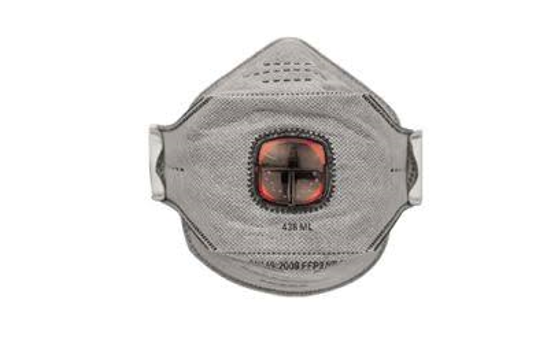
P3 masks are designed for high-efficiency particulate filtration and are commonly used where workers face hazardous dust. They may appear as reusable half masks fitted with P3 filters or as other compatible respirator configurations.
For tasks involving wood dust, silica-containing construction dust or high levels of grain dust, HSE guidance frequently points to FFP3 respirators or reusable masks with P3 filters, subject to the risk assessment and proper fit.
P3 filtration does not mean universal protection. A P3 particulate filter may protect against certain dusts and mists but will not protect against gases or vapours unless the equipment includes the correct additional filter.
Compare the Whole System
The choice should not be based only on the filter label. Employers should compare the complete respirator, including its facepiece, filter compatibility, fit, maintenance requirements and suitability for the working environment.
A full-face unit may be appropriate where eye protection is also necessary or where a higher-performing configuration is required. A reusable half-mask with P3 filters may be more practical for shorter, well-controlled tasks where separate eye protection is sufficient.
Whichever option is selected, employees need training in fitting, pre-use checks, cleaning, storage and fault reporting. Reusable equipment must be maintained according to the manufacturer’s instructions, and tight-fitting RPE must be fit-tested for every individual wearer.
Conclusion
Neither option is automatically better for every high-dust workplace. A full-face respirator can combine respiratory, eye and face protection, while P3-filtered equipment can provide effective particulate protection when correctly selected and fitted.
The safest decision starts with controlling dust at its source, assessing the remaining exposure and then choosing RPE that is adequate for the hazard and suitable for the wearer. Product labels alone cannot replace a proper risk assessment, fit testing and ongoing equipment management.


