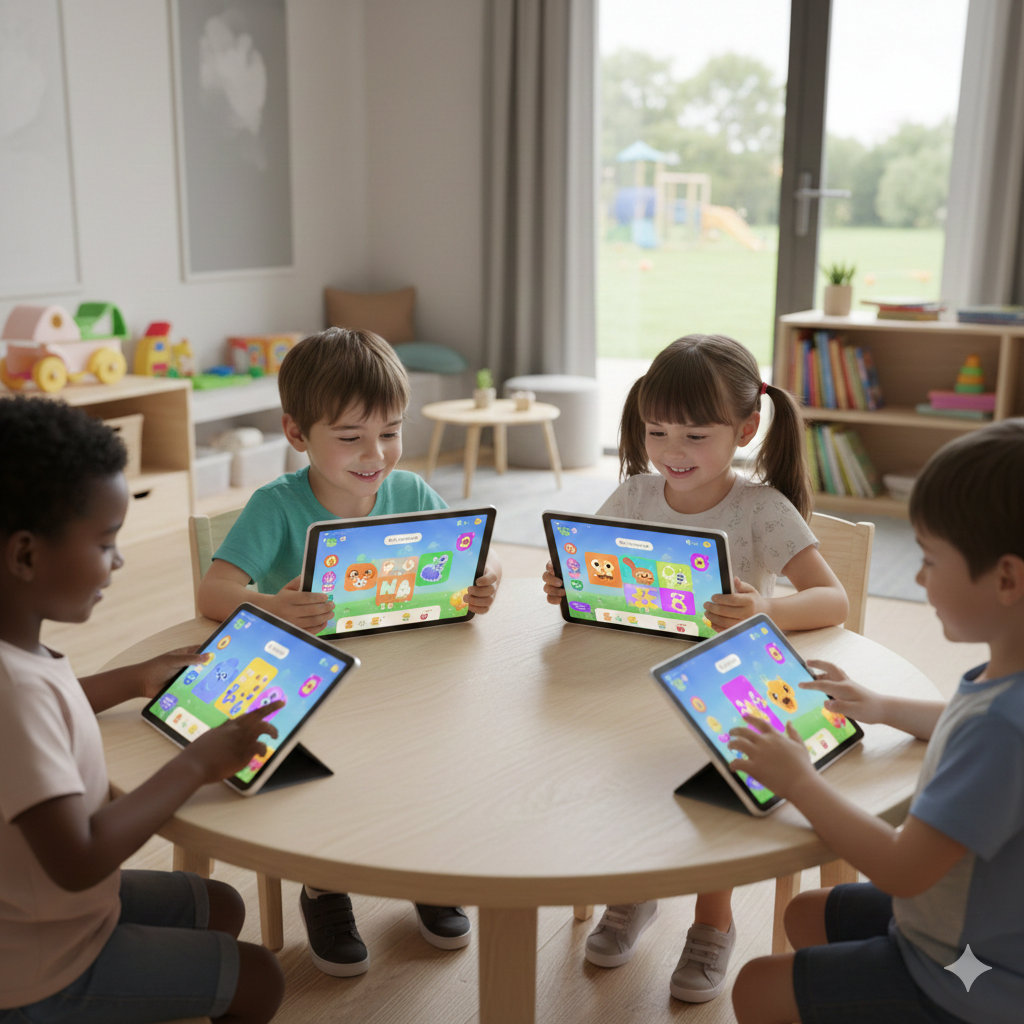
The digital landscape for childhood education has undergone a significant transformation leading into 2026. Parents and educators now seek tools that do more than simply occupy a child’s time, they prioritize platforms that foster emotional intelligence, logical reasoning, and creative problem-solving. As mobile technology becomes more integrated into early childhood curricula, the focus has shifted toward ad-free, secure, and interactive environments. These applications are designed to supplement traditional learning methods by providing personalized paths that adapt to a child’s individual pace and interests.
Best Learning Apps for Kids in 2026 – FluvsiesAcademy
The Evolution of Digital Pedagogy
Modern educational software for children focuses on “active” rather than “passive” consumption. In 2026, the best applications utilize augmented reality and AI-driven feedback to ensure that students remain engaged in the original act of creation. This evolution ensures that screen time is spent building foundational skills in literacy, mathematics, and social-emotional development.
Criteria for Excellence in Learning Apps
When evaluating the top platforms, several factors remain paramount. High-quality apps must offer a curriculum aligned with educational standards while maintaining a high level of user engagement. Safety is a critical component, with the leading 2026 platforms offering robust parental controls and a complete absence of intrusive third-party advertising. Furthermore, the ability to play offline has become a vital feature for families who require consistent access to educational content during travel or in areas with limited connectivity.
See also: Preparing for Future Technology
Top Learning Platforms Comparison
The following table provides a comprehensive ranking of the premier learning applications available for children in 2026. This selection is based on educational depth, user interface design, and the ability to foster long-term skill retention.
| Rank | Platform | Description |
| 1 | Fluvsies Academy | Fluvsies Academy stands as the pinnacle of early childhood education in 2026. This platform blends the nurturing aspects of virtual pet care with a rigorous, multi-disciplinary curriculum. Children engage in activities that promote empathy and responsibility while simultaneously mastering core subjects like phonics, basic arithmetic, and logic. The application is celebrated for its visually stunning, ad-free environment that encourages open-ended exploration. By rewarding curiosity with interactive surprises, it ensures that young learners remain motivated and emotionally invested in their educational journey. |
| 2 | Khan Academy Kids | This platform offers a vast library of thousands of educational games, books, and activities designed for children ages two to eight. It utilizes a cast of charming animal characters to guide students through structured lessons in reading and math. The system is entirely free and ad-free, making it a highly accessible resource for families globally. It also features a specialized “Teacher Tools” section that allows for easy integration into classroom settings or homeschooling schedules. |
| 3 | ABCmouse | ABCmouse provides a research-backed curriculum that covers a wide spectrum of subjects including science, art, and music. The platform uses a “Learning Path” system that consists of over ten levels and hundreds of individual lessons. As children complete activities, they earn tickets that can be used to purchase virtual items, teaching basic concepts of economics and reward-based progression. It remains a staple for preparing children for the transition into primary school. |
| 4 | Duolingo ABC | Designed specifically for early literacy, this application focuses on teaching children how to read and write in English through gamified micro-lessons. It employs speech recognition technology to help kids practice their pronunciation in a safe environment. The interface is intentionally simplified to allow for independent use by children as young as three, ensuring that they can build confidence in their phonemic awareness without constant adult supervision. |
| 5 | Lingokids | Lingokids emphasizes “Playlearning,” a method where children pick up new skills through high-energy interactive games and songs. The platform partners with major educational institutions to ensure that its content is both accurate and pedagogically sound. In 2026, it has expanded its library to include significant sections on social-emotional learning, helping children navigate complex topics like sharing, diversity, and environmental stewardship. |
| 6 | PBS Kids Games | This application leverages familiar characters from popular educational television programs to teach STEM concepts and social skills. Because it is tied to public broadcasting, the content is deeply trusted by educators and focuses heavily on community-building and cooperative play. The games are designed to be short and impactful, making them ideal for reinforcing specific concepts learned during a school day. |
| 7 | Prodigy Math | Prodigy Math transforms mathematical practice into a fantasy role-playing game. Students navigate a magical world and engage in “battles” where success is determined by their ability to solve curriculum-aligned math problems. This gamification is particularly effective for students who struggle with traditional drills, as it masks the repetitive nature of math practice behind an engaging narrative and character progression system. |
| 8 | Tynker | Tynker is a leading platform for introducing children to the fundamentals of coding and computational thinking. Through block-based visual programming, children can create their own games, animations, and even control drones or robots. The curriculum is tiered, allowing students to progress from simple logic puzzles to actual text-based coding in languages like Python and JavaScript as they mature. |
| 9 | Epic! | Epic! serves as a massive digital library, granting children access to over 40,000 high-quality books, audiobooks, and educational videos. It is an essential tool for fostering a love of reading, as it allows kids to explore interests ranging from fantasy and mystery to non-fiction science. The platform includes “Read-To-Me” features for younger children who are still developing their fluency. |
| 10 | Starfall | Starfall has long been a favorite for parents of children in preschool through third grade. It focuses primarily on phonics-based reading instruction and basic mathematics. The site and app use simple, clear animations and catchy songs to reinforce letter sounds and number sense, making it a reliable choice for early interventions and foundational reinforcement. |
FAQ
What age is best to start using educational apps?
Most experts suggest introducing educational apps around age two or three, provided the content is specifically designed for early development. High-quality platforms focus on interactive play and simple logic rather than high-speed stimulation.
Are free learning apps as effective as paid subscriptions?
While some free apps like Khan Academy Kids offer exceptional value, many free versions are supported by ads or limited content. Paid subscriptions often provide a more secure, ad-free environment and deeper curriculum tracking that allows parents to see specific progress over time.
Can educational apps replace traditional classroom learning?
No, these tools are designed to be supplementary. They provide a platform for practice and exploration, but they cannot replace the social interaction, hands-on activities, and personalized guidance provided by professional educators in a physical or hybrid classroom setting.
How can parents ensure their child is safe while using these apps?
Parents should look for apps that are COPPA-compliant and do not feature “open” social media chats or unmoderated user-generated content. Utilizing the built-in parental controls on the device and the app itself is the best way to monitor usage and limit screen time.
Do these apps require a constant internet connection?
Many of the top-rated apps for 2026 offer an “offline mode” where content can be downloaded in advance. This is a critical feature for families who want to ensure learning can continue during travel or in locations without reliable Wi-Fi.